If water pressure is weak at home, do not begin by asking whether you need a half-horsepower, one-horsepower, or two-horsepower pump. Horsepower alone does not tell you whether the pump will provide comfortable pressure at the farthest bathroom. The right choice begins with the water source, the height of the property, the number of outlets that may operate at the same time, pipe length, filter condition, and the pressure required at the point of use. A smaller pump may work perfectly in one home while a more powerful pump can be a poor choice in another if it creates more pressure than the plumbing system needs. The correct Grundfos pump should therefore be selected according to the complete system rather than the number of floors or motor power alone.
Choosing the right water pump power
Choosing the right water pump power begins with identifying the actual problem before buying any pump. If the water is weak because the incoming source pressure itself is low, a booster pump may be part of the solution. But if pressure used to be normal and became weak because of a clogged filter, a partially closed valve, a leak, or a suction-line problem, installing a stronger pump may only hide the cause temporarily instead of fixing it.
The next step is to determine two basic requirements: how much water needs to flow and how much pressure the system must provide. Technically, this is understood through flow rate and required head. Flow demand rises as more outlets operate at the same time, while required head is affected by the building height, friction losses in pipes, filters, elbows, and valves.
This is exactly why horsepower alone is not enough. Two pumps with similar motor power can have different performance curves, which means one may deliver more flow at lower pressure while another can maintain higher pressure at the same flow rate. A statement such as “install a one-horsepower pump and you will be fine” is not a complete technical calculation.
Consider a practical example. A two-story house with three bathrooms where normal use involves one bathroom and the kitchen is completely different from a two-story villa with six bathrooms where three showers, the washing machine, and the kitchen may all operate at the same time. The number of floors is identical, but the required flow is very different.
The water source must also be considered. A pump drawing from a ground tank operates under different conditions from a pump receiving existing pressure from the water supply. If incoming pressure is already present, it needs to be included with the pressure added by the pump so the final pressure does not exceed what the plumbing components can safely handle.
The final step is to compare the required operating point with the pump performance curve or the manufacturer’s selection guide. This tells you whether the system needs a traditional pump with a controller and pressure tank or a smart variable-speed pump that adjusts performance according to demand.
-
Pump selection begins by identifying the cause of weak pressure because a clogged filter or partially closed valve needs the restriction removed rather than a larger motor
-
Required flow depends on how many outlets may operate at the same time while required pressure depends on elevation and friction losses throughout the plumbing network
-
Horsepower alone is not enough for comparison because pumps with similar motor power can deliver different flow rates at the same operating pressure
-
Existing inlet pressure must be included because final system pressure is the combination of the incoming conditions and the pressure added by the booster pump
-
Professional selection uses the model’s performance curve or manufacturer guidance instead of a fixed rule such as assigning a certain horsepower to each floor
-
The goal is not to achieve the highest possible pressure but to provide comfortable stable pressure within the limits of the heater filters valves hoses and the rest of the plumbing system
Grundfos pump for the home
Choosing a Grundfos pump for the home starts with identifying the type of application because Grundfos offers more than one solution rather than a single pump that fits every property. There are traditional booster pumps, integrated systems, and variable-speed pumps such as certain SCALA solutions designed to adjust pressure according to demand.
If the home’s main problem is that water pressure changes every time another faucet is opened, a pump that adjusts speed according to demand may be more suitable than a traditional system that simply switches on and off. Variable-speed systems can maintain pressure more consistently as the number of operating outlets changes, provided the pump remains within its performance range.
However, this does not mean a smart or variable-speed pump is automatically the best choice for every villa. Selection still depends on the number of floors, number of outlets, required flow, elevation, and real operating conditions.
A house with a nearby tank, short pipe runs, and limited simultaneous use is completely different from a three-story property with long piping, central filters, a water heater, and several outlets operating at once. Every component in the water path creates some pressure loss, so the entire system needs to be considered rather than the pump alone.
Installation conditions are important as well. The pump needs a suitable water supply and should not be allowed to run dry. If it draws from a tank located below pump level, suction height becomes part of the calculation because suction conditions reduce the available performance margin.
In practical terms, a household pump should not be selected simply because it “feels powerful.” A pump that is too large can create pressure higher than necessary and increase stress on hoses, mixers, heater valves, filters, and other plumbing components if the system is not designed for it.
On the other hand, a pump that is too small may provide excellent pressure when only one faucet is open but experience a significant drop as soon as a second bathroom is used. The real test is therefore peak realistic use rather than one open tap.
-
A Grundfos pump for the home should be selected according to the type of demand because traditional and variable-speed systems handle changing usage differently
-
Variable-speed systems are particularly useful when the number of open outlets changes frequently and more stable pressure is required
-
Central filters water heaters valves and long pipe runs should all be included because pressure loss occurs throughout the system rather than only at the pump
-
A pump that is too small may look excellent with one faucet open but reveal its limitations when simultaneous demand increases
-
A pump that is larger than necessary is not automatically better because final pressure must remain suitable for all components in the plumbing network
-
The correct Grundfos model is selected after establishing the required operating point and matching it to the model performance rather than buying a brand name or motor size without calculation
Pump power according to the number of floors
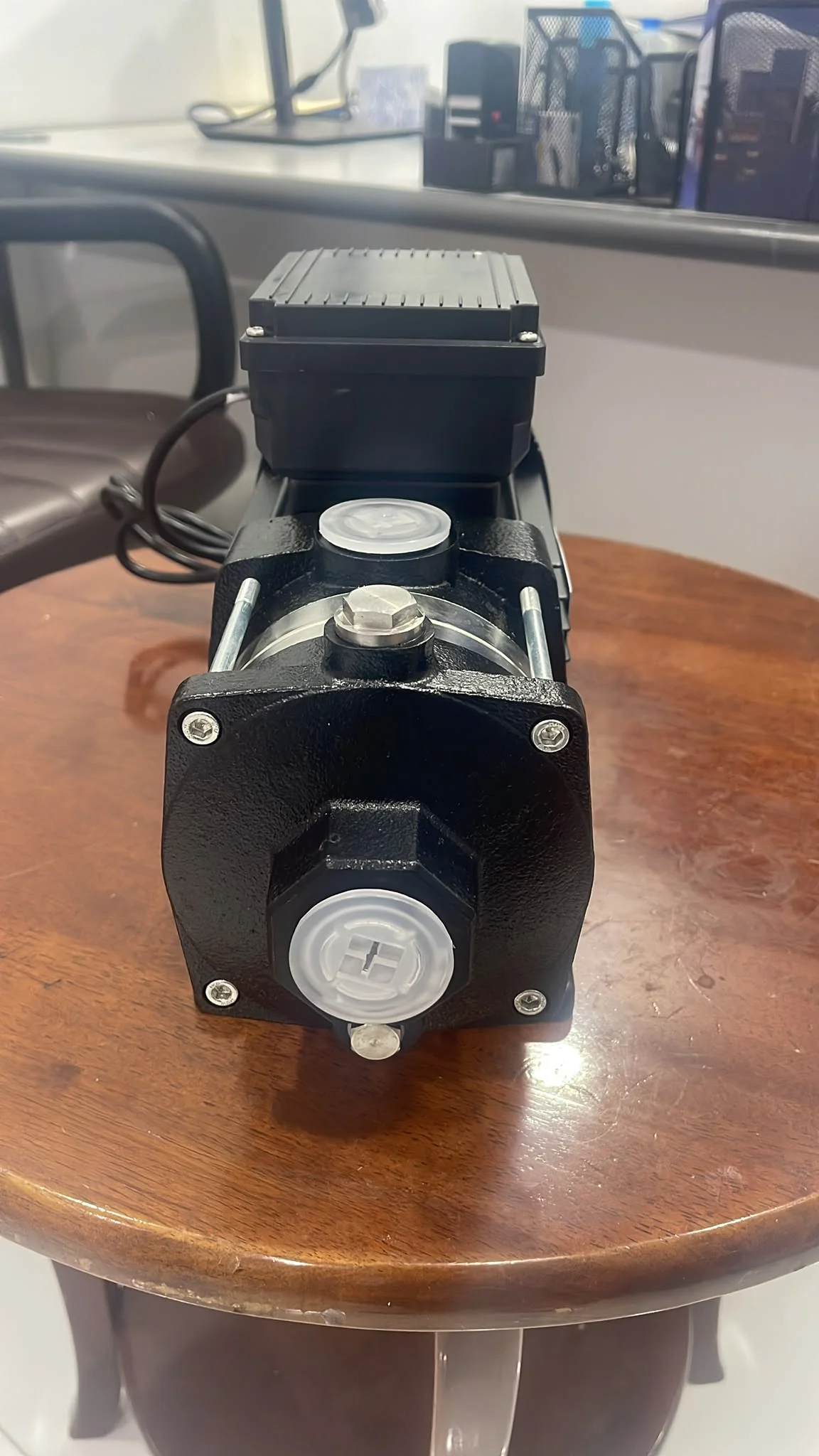
Determining pump power according to the number of floors is useful as an initial consideration, but it is not enough to make the final selection. Every additional floor increases the vertical height the pump must overcome before providing usable pressure at the fixture, but elevation is only one part of the calculation. Pipe length, pipe diameter, elbows, filters, and the number of outlets operating at the same time also matter.
This is why two three-story homes do not necessarily need the same pump. One may have only four regularly used outlets and short pipe runs while the other has ten bathrooms, longer piping, and water-treatment equipment that creates additional pressure loss.
A sound pump-selection method therefore considers the number of floors together with the number of fixtures or points of use rather than treating building height as the only factor.
It is also important to define what “three floors” means in the actual installation. A pump installed at ground level with a tank above it has different conditions from a pump drawing from a ground-level or underground tank and then pushing water to the roof level. Suction conditions before the pump matter just as much as elevation after it.
The required pressure at the highest and farthest fixture should then be established. The goal is not merely for water to reach the third floor. Water may reach the fixture while shower pressure remains extremely weak. Correct selection provides comfortable pressure after elevation and friction losses have been taken into account.
Consider a three-story villa where the farthest bathroom is on the top floor but normal peak use involves only two or three outlets. The required pump is different from that of another three-story property where many more outlets operate simultaneously. The vertical height is similar, but the flow requirement is not.
One of the most common mistakes is assigning a fixed horsepower increase for every additional floor. This rule is overly simplistic because motor horsepower does not translate directly into fixture pressure without knowing the pump design and operating point.
The number of floors therefore determines part of the static head, but final pump selection requires total head together with the required flow rate. This produces a pump that genuinely serves the home instead of one that looks powerful on paper but performs poorly during use or creates unnecessary pressure.
-
The number of floors matters because it increases the vertical distance between the pump and the highest fixture but it does not determine pump power by itself
-
Two homes with the same number of floors can require different pumps because of different simultaneous demand pipe lengths and pipe diameters
-
Proper selection combines the number of floors with the number of active outlets which is why floor count alone is an incomplete rule
-
If the pump draws from a lower tank then suction conditions must be included before calculating the required discharge head
-
The objective is not simply to make water reach the highest floor but to maintain comfortable pressure at the farthest outlet during actual use
-
The most accurate calculation combines elevation friction losses required fixture pressure and simultaneous flow before selecting the model that can maintain that operating point
Pump for weak water pressure
Choosing a pump for weak water pressure starts with identifying exactly where the weakness occurs because not every home with low pressure needs the same pump. Sometimes the issue starts at the source itself, while in other cases water enters the home at acceptable pressure but loses pressure inside the network because of a dirty filter, narrow piping, partially open valves, or significant elevation.
The first step is to compare pressure before and after the pump where practical. This helps determine whether the system genuinely needs pressure boosting or whether the restriction is somewhere downstream inside the property. If pressure is good near the entrance but weak only on one floor, that specific route should be checked before increasing pump size.
Flow behavior during actual use also matters. A faucet may appear strong when it is the only fixture operating, but pressure can drop quickly once a second shower is opened. This indicates that the system cannot maintain the required flow and pressure under higher demand. In that situation, the pump should be selected according to peak use rather than a one-faucet test.
The type of control system also makes a difference. A traditional pump may start when pressure drops and stop when the system reaches a certain point, while a variable-speed pump can adjust performance as demand changes and maintain more stable pressure within its operating limits. This does not mean the smart system is always superior because a simple property with predictable demand may be served perfectly by a correctly sized traditional setup.
The water source is extremely important. If the pump draws from a ground tank, the suction line must be properly sized and free from air leaks or restrictions because a more powerful pump cannot indefinitely compensate for a poor suction line.
Filters should also be checked. A central filter that is too small for the required flow or a clogged cartridge can create substantial pressure loss. Installing a larger pump in front of a restrictive filter is not a smart solution because it increases pressure around the restriction rather than removing the actual cause.
From a comfort perspective, the goal is not to create the strongest possible shower. Excessive pressure can be uncomfortable and can place unnecessary stress on hoses, mixers, heater valves, filters, and the rest of the system. The correct selection provides stable comfortable pressure within suitable limits.
-
A pressure booster should be selected only after determining whether the weakness comes from the source or from restrictions inside the plumbing network
-
Testing pressure with only one fixture open is not enough because many problems appear only when two or more outlets operate at the same time
-
Variable-speed pumps are useful when demand changes significantly while a properly designed traditional system can remain ideal for stable predictable demand
-
The suction line from the tank must be in good condition because air leaks or undersized piping can limit pump performance regardless of motor power
-
Clogged or undersized filters can cause major pressure loss and should be checked before deciding to increase pump size
-
Higher pressure is not the objective by itself because real comfort comes from stable pressure that suits the plumbing components rather than unnecessarily stressing the network
Choosing water pump horsepower
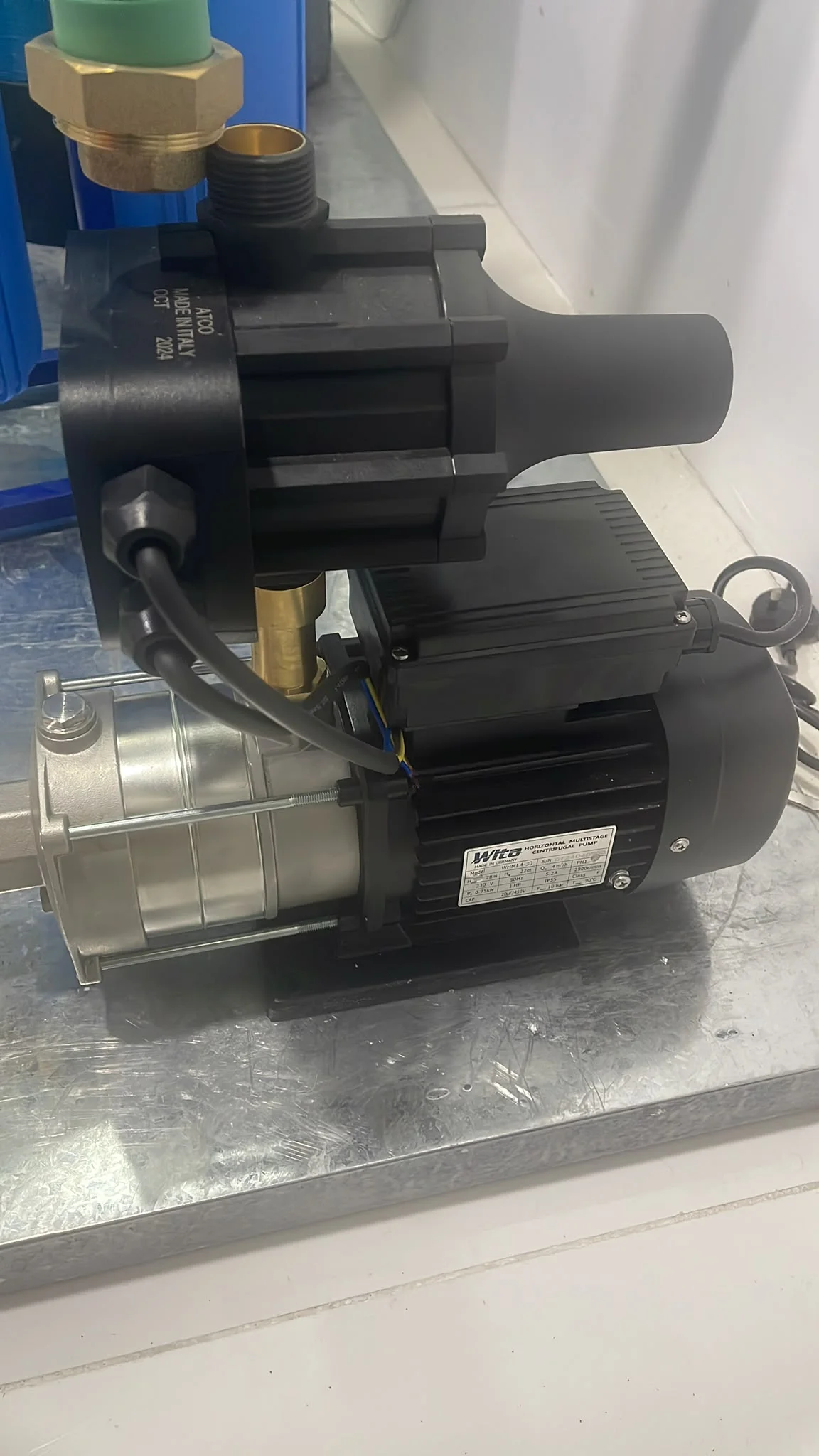
Choosing water pump horsepower is one of the most commonly oversimplified parts of pump selection because people often ask whether they need half a horsepower, one horsepower, or one and a half horsepower as though the motor rating alone determines pressure at the faucet. Horsepower gives an idea of motor power, but it does not tell you the actual flow and pressure available at the required operating point.
Every pump has a performance curve showing how much flow it can provide at a certain head or pressure. As the required pressure increases, available flow generally changes. This means two one-horsepower pumps can produce noticeably different results if their hydraulic designs are different.
A small home with short pipe runs and modest use may be served well by a suitable half-horsepower model. But it would be inaccurate to claim that half a horsepower is always correct for every single-story home because the number of bathrooms, water source, filtration system, and pipe length can change the requirement substantially.
Likewise, it is not enough to say one horsepower for a villa and two horsepower for a larger property without calculations. A large villa may benefit from a correctly selected variable-speed pump with lower nominal motor power while still providing more stable pressure than an oversized traditional pump.
Motor power should not be confused only with electricity consumption either. Selecting a pump larger than needed can result in inefficient operation or unsuitable cycling if the surrounding system is not designed correctly.
If the system uses a traditional controller and pressure tank, the tank size and pressure settings should be compatible with the pump. A powerful pump paired with a very small pressure tank can create frequent starting and stopping, which can be annoying and place additional stress on components.
Variable-speed smart pumps behave differently because they adjust speed instead of depending only on full-speed operation followed by complete shutdown. Even then, the pump still needs to be sized correctly for the required flow and head.
The final decision should therefore come after calculating the required flow and total head and checking which Grundfos model can deliver that operating point within a suitable range. Horsepower then becomes the result of the calculation rather than the starting point.
-
Horsepower describes motor capability but does not directly tell you how much pressure and flow will be available inside the property
-
The pump performance curve is more important than the number printed on the motor because actual output changes according to the required operating point
-
There is no fixed rule assigning half a horsepower to one floor and one horsepower to two floors because pipe length water source and simultaneous demand all affect the calculation
-
An oversized pump can create unnecessary pressure or inefficient operation if the system has not been designed around it
-
The pressure tank and traditional control system should be compatible with pump capacity to avoid excessive starting and stopping
-
The correct horsepower should result from calculating required flow and head and then selecting the suitable pump model rather than choosing horsepower first
Water pump size for a villa
Determining the water pump size for a villa requires a broader assessment than counting bathrooms because villas often combine several pressure-related factors such as multiple floors, long pipe runs, central filters, a water heater, a garden, an outdoor kitchen, and several outlets operating at the same time.
The first step is to define a realistic peak-use scenario. There is usually no need to assume every faucet in the villa will operate simultaneously, but using an unrealistically low number can result in an undersized pump. The expected number of outlets operating during busy periods should be established and the required flow should be based on that demand.
The next step is to calculate the elevation between the pump and the highest fixture. If the pump is installed on the ground floor and the highest shower is on the third floor, this vertical difference contributes directly to the required head before pipe and filter losses are added.
Long pipe runs become increasingly important as flow rises. Relatively small pipes carrying high flow can create substantial pressure loss even when the pump is powerful. In some properties, modifying part of the plumbing network can provide more improvement than installing a larger motor.
Filters are also important in villas, especially where central filtration or multiple filtration stages are used. Every filter creates some pressure drop that increases with flow and as the filter becomes dirty, so this resistance must be included in the system calculation.
If the villa has a large central heater or several heaters, the pump should not be selected on the assumption that the water heater itself needs “more force.” The heater simply needs pressure within its allowable operating range while the pump’s role is to provide appropriate flow and pressure for the overall plumbing network.
Garden irrigation and external service outlets should be included as well. If irrigation runs on the same plumbing system during shower time, it may consume a significant part of the available flow. Whether these uses occur simultaneously or separately can change the required pump size.
In some villas, a variable-speed pump is useful because demand may shift from one faucet to several outlets throughout the day. In other cases, a traditional pump with a correctly designed pressure system may be simpler and more economical.
The correct villa pump size is therefore the one that serves realistic peak demand without creating excessive pressure during light use.
-
Pump size for a villa should be based on the number of outlets expected to operate during realistic peak demand rather than the total number of faucets in the building
-
Elevation between the pump and the highest bathroom contributes directly to required head and must be added to losses from pipes and filters
-
Small pipe diameters under high flow can become a major restriction that reduces pressure no matter how much pump power is added
-
Central filters must be included because they create pressure loss that increases with flow and with accumulated contamination
-
Garden irrigation and outdoor services on the same network should be included in the peak-use scenario when they operate at the same time as indoor fixtures
-
The correct villa pump provides stable pressure under high demand without creating unnecessarily high pressure during low-demand periods
Grundfos for boosting home water pressure
Using Grundfos for boosting home water pressure makes sense when the goal is not simply to install a powerful pump but to obtain comfortable stable pressure that matches everyday use without unnecessary excess. The basic idea is that the pump should compensate for the weakness in the system and deliver adequate pressure to the farthest outlet even as the number of operating fixtures changes.
Before selecting a model, the nature of the problem should be identified. If pressure is weak throughout the home from the beginning, the water source and main booster system deserve attention. If the weakness appears mainly on upper floors or only when several bathrooms operate at the same time, the issue may involve elevation, flow demand, or pressure loss inside the network.
Grundfos offers traditional solutions and variable-speed systems, and each approach has its place. A traditional pump can be an excellent choice in a home with stable predictable demand, while a smart variable-speed pump can be especially useful where usage changes continuously from one faucet to several outlets and more stable pressure is desired.
Choosing a smart pump does not remove the need for calculations. If the model is too small, it will eventually reach its operating limit during high demand and pressure will fall. If it is much larger than necessary, the homeowner may simply pay more without gaining meaningful value.
The plumbing system itself also needs inspection. Old narrow pipes or a clogged central filter can consume a large part of the available pressure. A pump may raise pressure before a restriction, but it cannot make the physical resistance of the network disappear.
Pump location matters as well. The suction line should be as suitable and unrestricted as possible and free of air leaks because poor suction conditions reduce performance and make the pump operate under more difficult conditions.
Grundfos should therefore not be selected simply because it is a well-known brand. The real value comes from choosing a model that matches the property, installing it correctly, and setting it to a comfortable pressure that suits the water heater filters mixers and the rest of the plumbing system.
-
A Grundfos booster gives the best result when it is selected according to the real operating point of the home rather than brand reputation alone
-
Weakness that appears mainly on upper floors is different from low pressure throughout the property so identifying where the problem occurs should come before model selection
-
A variable-speed system is useful for changing demand but still needs enough capacity to maintain pressure during peak use
-
A pump cannot magically correct narrow piping or a clogged filter because any restriction inside the network will continue to create pressure loss
-
Suction-line design tank conditions and valves before the pump affect final performance just as much as motor power
-
Correct pressure settings are important so the system provides comfort without placing unnecessary stress on the water heater filters hoses and plumbing connections
Pump suitable for the number of bathrooms
Choosing a pump suitable for the number of bathrooms does not mean simply counting bathrooms and buying a pump according to that number. The more important question is how many bathrooms may realistically operate at the same time. A villa with six bathrooms where only two are normally used simultaneously is very different from a house with four bathrooms where three showers may operate every morning.
Every open shower or faucet increases the flow required from the pump. As simultaneous demand rises, the pump needs to maintain sufficient flow without allowing pressure at the farthest fixture to collapse.
This creates an important distinction between the total number of bathrooms and the number of active bathrooms. The first gives a general idea of property size, while the second is what actually affects peak-flow calculations.
Bathroom fixtures are not identical either. A large rain shower can require more flow than a standard shower head. A bathroom with a bathtub or multiple shower outlets may also place greater demand on the system. “One bathroom” is therefore not a fixed unit of water demand.
The kitchen, washing machine, and other outlets should be included as well. If three bathrooms operate while the kitchen is also drawing water, total demand is higher than the bathrooms alone suggest.
The number of floors remains relevant because it adds elevation. Four bathrooms all on the ground floor do not create the same head requirement as four bathrooms distributed across three floors.
At the same time, there is no need to size the pump for an unrealistic worst-case scenario that never occurs. If every bathroom is practically never used at once, selecting a very large pump for that hypothetical situation may be unnecessary.
The opposite mistake is choosing the pump based on only one operating bathroom, which causes pressure to collapse during real peak use. The better approach is to define a realistic peak based on the household’s actual routine.
-
The total number of bathrooms provides an initial idea but the real calculation depends on how many outlets are expected to operate simultaneously
-
High-flow shower fixtures change the requirement because every bathroom does not necessarily consume the same amount of water
-
Kitchen washing-machine and other water use occurring at peak time should be included in the required flow rather than ignored
-
Bathrooms distributed across several floors increase the required head even when the total number of bathrooms remains the same
-
Sizing for an unrealistic maximum can increase cost unnecessarily while sizing for one fixture can make pressure collapse during normal family use
-
The best estimate comes from actual household habits and identifying the busiest realistic water-use period before selecting the pump
Calculating home water pump power
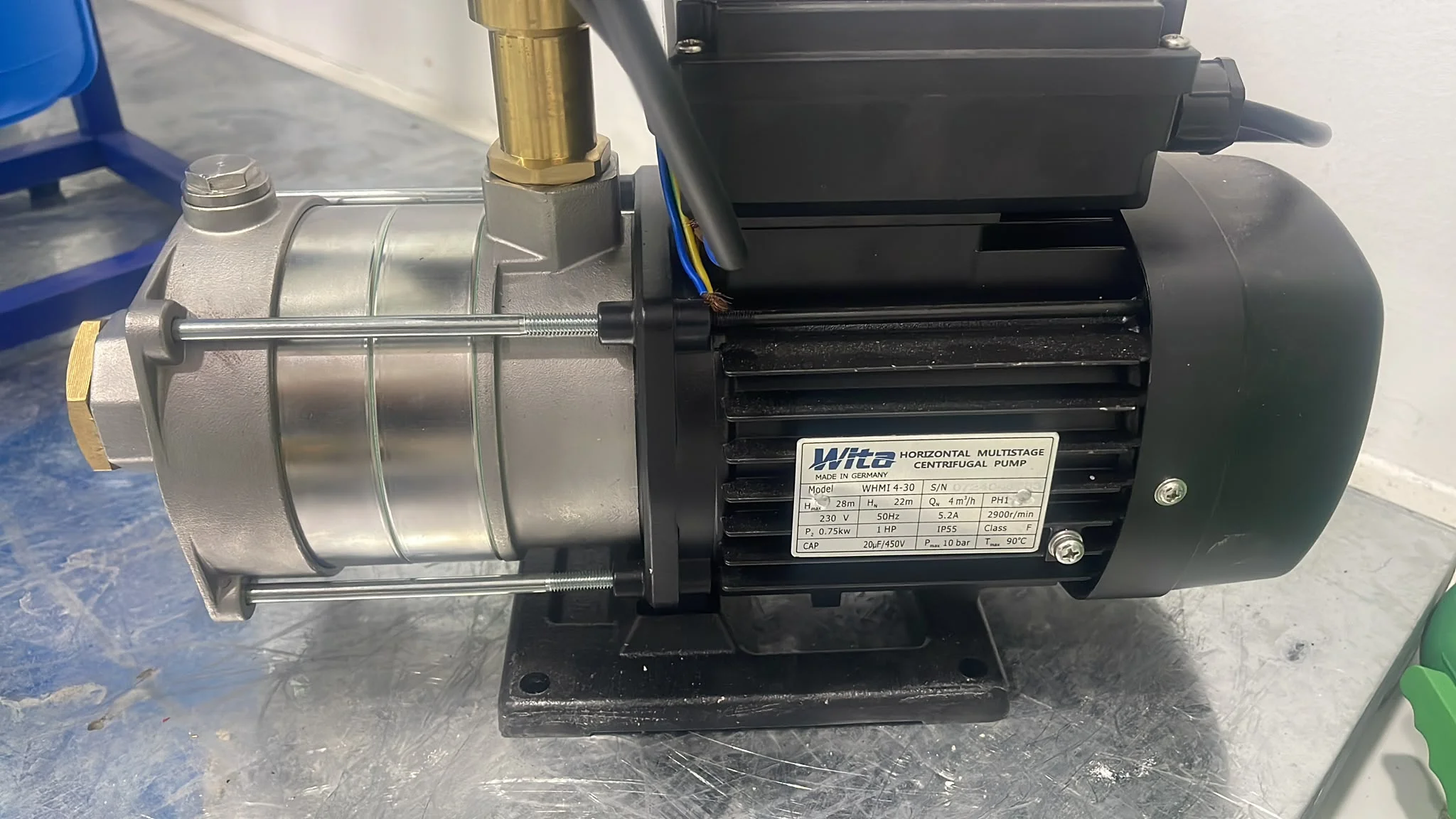
Calculating home water pump power becomes much more accurate when the calculation is separated into parts rather than converting the number of floors directly into horsepower. The first part is required flow, the second is total head, and the third is the pressure the homeowner wants at the point of use.
Start with flow. Estimate how many outlets are likely to operate at the same time and determine their realistic combined demand. There is no need to add every faucet in the property if they will never all operate together, but the calculation should still represent normal peak use.
Next, calculate the vertical difference between the pump and the highest fixture. Every meter of elevation consumes part of the available pump head before the water reaches the user.
Then add friction losses from the plumbing network. Long pipes, small diameters, elbows, valves, and filters all create resistance. These losses usually increase as flow rises, which is why elevation alone is not enough.
The desired pressure at the farthest outlet should then be defined. The objective is not simply for water to reach the upper floor but to reach it at a comfortable usable pressure.
If pressure already exists at the pump inlet, that pressure should be included. The system should not be calculated as though it always starts at zero because that can result in a pump that adds more pressure than necessary.
Once required flow and total head are known, the pump performance curve becomes the main reference. The correct model is one that can provide the required flow at the required head within a suitable operating region rather than at the extreme edge of its capability.
Only then does horsepower become relevant. Depending on the home, the calculation may lead to a half-horsepower, one-horsepower, or larger model, but the motor rating should follow the calculation rather than lead it.
For example, a two-story villa with three simultaneous outlets, central filtration, and long pipe runs needs a different calculation from a smaller two-story house with short plumbing and no central filters. The number of floors may match, but the operating point is different.
Selecting the pump this way produces a quieter, more stable system that is less likely to suffer from excessive pressure or sudden pressure loss.
-
Pump calculation should begin with required flow and head before selecting horsepower rather than converting floor count directly into motor power
-
Vertical elevation is only part of the calculation because pipes filters elbows and valves add losses that must also be included
-
Required pressure at the farthest fixture should be defined because simply getting water to the upper floor does not guarantee comfortable use
-
Existing inlet pressure should be included so the selected pump does not add more pressure than the system needs
-
The performance curve is the real reference for confirming whether a pump can provide the required flow at the required head
-
Selecting a pump near a suitable operating point provides better stability than forcing the pump to work continuously at its maximum limit
Booster pump suitable for the home
Choosing a booster pump suitable for the home works best when the house is treated as one complete system rather than simply a number of floors or bathrooms. The right pump provides enough flow and pressure during real use while remaining within comfortable and safe limits for the plumbing network without being unnecessarily oversized or clearly inadequate during peak demand.
The first thing to examine is the water source. Does the pump draw from a ground tank? Does it receive existing pressure from the supply line? Is there a significant vertical difference between the tank and the pump? These conditions change pump selection because performance is affected by what happens before the pump as well as what happens after it.
The household usage pattern should then be reviewed. How many outlets normally operate at the same time? Is there a distant upper floor? Do the kitchen, washing machine, or garden share the same network? Does pressure become weak only when demand rises, or is it poor all day? These questions provide a much more realistic picture.
The plumbing network itself should then be inspected. Old pipes, undersized diameters, a dirty central filter, or partially closed valves can consume a large portion of the available pressure. If these issues are ignored and a stronger pump is installed, pressure may simply increase before the restriction without delivering the expected improvement after it.
The control type also matters. A home with highly variable demand may benefit from a variable-speed pump because it can adjust performance according to usage and maintain more stable pressure. A simpler property with stable demand may be served perfectly well by a correctly designed traditional system.
Noise level, installation location, and future maintenance should also be considered. A pump installed near bedrooms creates different requirements from a pump located in an isolated service room.
A common mistake is asking for “the strongest Grundfos” because higher power is assumed to mean greater comfort. In practice, the result can be unnecessary pressure, more noise, less efficient operation, and greater stress on the plumbing network.
The best choice is the pump that meets the required operating point quietly and consistently while leaving a sensible margin for demand without being excessively oversized.
-
A suitable home booster begins with understanding the water source and suction conditions before thinking about floor count or horsepower
-
Real usage patterns and the number of simultaneous outlets matter more than the total number of faucets installed in the property
-
Pipes filters and valves should be checked before increasing pump size because internal restrictions may be the actual cause of weak pressure
-
A variable-speed pump suits homes with frequently changing demand while a traditional system can remain ideal when it is correctly designed and adjusted
-
Installation location noise and ease of maintenance are practical factors that should be considered before purchase rather than afterward
-
The strongest pump available is not necessarily the best because the real objective is stable comfortable pressure rather than maximum possible pressure
Conclusion
If water pressure is weak at home, do not begin by asking whether you need half a horsepower, one horsepower, or two horsepower. The correct question is: what flow rate is required and what head and pressure are needed at the farthest outlet?
Selecting the right Grundfos pump depends on the number of outlets operating at the same time, the number of floors, elevation, pipe length, filters, water source, inlet pressure, and the overall condition of the plumbing system.
The number of floors matters, but it is not enough. The number of bathrooms matters too, but it is not enough on its own either. Both need to be understood within the home’s real usage pattern.
If pressure is weak because of a clogged filter, narrow pipe, partially closed valve, suction issue, or another restriction, installing a larger pump will not solve the root cause.
The right pump provides stable comfortable pressure during peak demand without placing unnecessary stress on the plumbing network. This is why choosing from the pump performance curve and required operating point is far more accurate than relying on horsepower alone.
Frequently Asked Questions
How do I know what Grundfos pump power is right for my home?
It is determined by the required flow rate, elevation difference, pipe and filter losses, and the pressure required at the farthest outlet rather than the number of floors alone.
Does the number of floors determine pump horsepower?
No. The number of floors contributes to required head, but the number of outlets, pipe length, pipe diameter, filters, and simultaneous use also affect pump selection.
Is a larger pump always better?
No. A pump that is larger than necessary can create excessive pressure and place more stress on hoses, valves, filters, and the rest of the plumbing system.
What is the difference between a traditional pump and a smart pump?
A traditional system generally starts and stops according to its control method, while a variable-speed smart pump adjusts its speed according to demand to maintain more stable pressure within its operating limits.
Is the number of bathrooms important when choosing a pump?
Yes, but it is not enough by itself. What matters more is how many bathrooms and other fixtures may operate at the same time and how much flow each one requires.
Can a central filter reduce water pressure?
Yes. If the filter is too small for the required flow or becomes dirty or clogged, it can create significant pressure loss inside the plumbing system.
Should I choose a half-horsepower pump for a one-story home?
There is no universal rule. A one-story property can be a small home with two outlets or a large house with several bathrooms and simultaneous demand, so flow and pressure requirements still need to be calculated.
Is a smart Grundfos pump suitable for every villa?
Not necessarily. It can be very useful in many homes, especially where demand changes significantly, but the model still needs to match the villa’s actual flow and head requirements.
Why does pressure drop when a second bathroom is used?
Usually because the system cannot maintain the required flow and pressure when demand increases or because a restriction in the plumbing becomes more significant at higher flow.
When should I replace the pump instead of repairing the pressure problem?
Replacement should be considered after confirming that weak pressure is not being caused by a filter, valve, leak, suction-line issue, or undersized pipe and that the existing pump genuinely cannot provide the operating point required by the home.